

 A Bulbs
 Deco Bulbs
 Filament Bulbs
 High Watt Bulbs
 Spot Lamps
 Others
 Downlights
 Spotlights
 Panel Lights
 Flood Lights
 Street Lights
 LED strip lights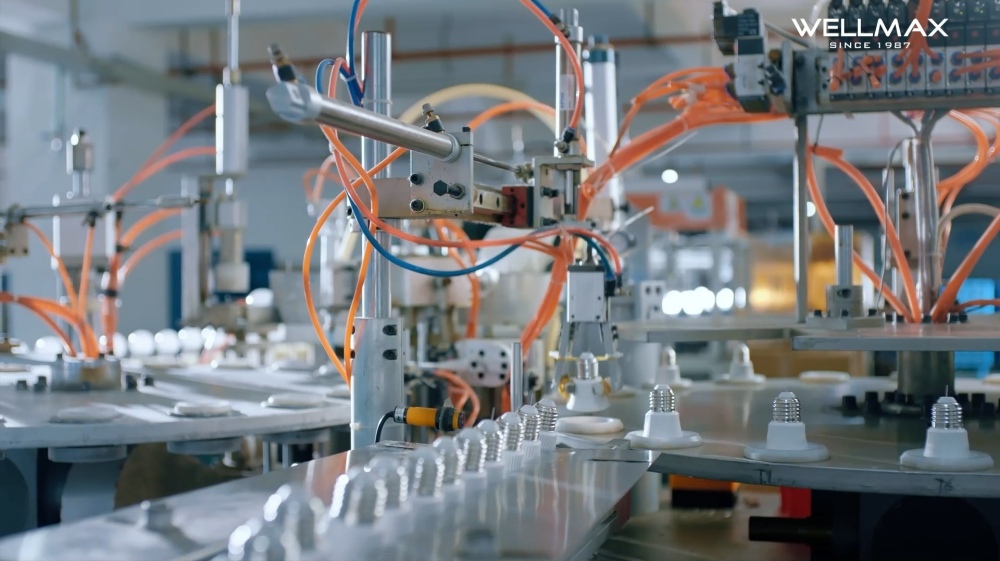
Introduction to LED Light Bulb SKD Production
SKD production refers to shipping partially assembled components—such as LED chips, drivers, housings, and PCBs—to the target market for final assembly. This approach is an effective strategy for companies seeking a competitive advantage through local assembly. However, since the final assembly takes place far from the main LED manufacturing facility in China, quality control becomes a critical factor in ensuring the finished product meets the original design standards.
Understanding the Role of Quality in LED Bulb Manufacturing
A solid quality control system is essential for ensuring the reliability and safety of LED bulb. For a skilled LED bulb manufacturer, quality goes beyond a last look; it acts as a belief woven into the full span of the item. Poor quality control during SKD assembly can cause blinking, early breakdowns, or safety risks, which might harm a brand’s reputation. Through applying firm rules, we make certain that each LED light bulb sent to a home gives the ease and safety that buyers look for.
Choosing the Right LED Bulb Supplier: A Foundation for Quality
The success of your SKD project begins with choosing the right LED bulb manufacturer. You need to check possible LED bulb SKD suppliers by their approvals (ISO, CE, CB, RoHS), check methods, and chain openness. A trusted LED light manufacturer in China, such as WELLMAX, focuses on a “Three-Stage” quality method and gives wide tech papers, like LM-80 reports and IES files, to aid your local work.
Raw Material & Incoming Component Inspection
Before assembly begins, each component must undergo a strict Incoming Quality Control (IQC) process. This is the spot where the base of a durable bulb gets set.
LED Chips
Checking branded chips (e.g., Samsung, Seoul Semiconductor) for color consistency and luminous output.
Driver Circuits
Checking capacitors and ICs, since the driver is one of the most common sources of failure.
Thermal Management
Checking the heat dissipation performance of the housing to ensure the bulb can achieve its expected lifespan of 25,000 to 50,000 hours.
In-Process Quality Checks During Assembly
Monitoring the assembly process in real time prevents minor errors from escalating into major quality issues. Key checks include:
Soldering Inspection
Secure electrical connections between the PCB and the driver must be ensured to maintain long-term stability.
Component Alignment
The LED board must be exactly placed inside the housing to optimize thermal contact, ensuring efficient heat dissipation.
Electrical Monitoring
This involves monitoring power consumption accuracy and the power factor (PF) throughout the assembly process to confirm compliance with technical specifications.
Performance Testing and Reliability Validation
Validation tests simulate real-life use and test the bulb under stress conditions. This step is indispensable for leading LED manufacturers in China.
| Test | Purpose | Conditions |
| Aging Test | Detect early failures (infant mortality) | 2–4 hours of steady running |
| High/Low Voltage Stress | Check driver stability under voltage fluctuations | ±15% of set voltage |
| Thermal Scan | Find “hot spots” in the driver or PCB | Must not exceed rated T-case temperature |
| CRI & CCT Check | Confirm light quality and color accuracy | CRI > 80; CCT shift < 5 SDCM |
Final Inspection Before Packaging
The FQC ensures that only defect-free products are dispatched to the customer. This process covers a final lighting performance check, confirmation of serial codes for traceability, and a full visual inspection to identify any cosmetic flaws or loose parts.
QC Documentation and Traceability
A reliable LED light manufacturer in China doesn’t just run tests; they keep complete test records to back them up. This level of traceability means you can track every single batch back to its specific raw materials or the exact assembly date. Having this data on hand is absolutely crucial for continuous improvement and ensures you can handle any after-sales claims transparently and with confidence.
LED Lighting Use Case Considerations in Residential Applications
The level of precision in SKD production directly affects the end-user experience every time they flick a switch. Whether you are supplying bedroom lights that require soft, flicker-free illumination or bathroom LED lights built for robust moisture resistance, steady QC is what ensures the bedroom LED lights and bathroom lights you provide perform reliably. In home environments, high CRI levels hold special weight because they make colors look genuine and vibrant rather than dull or washed out.
Summary: Benefits of a Comprehensive Quality Control Strategy
Think of a comprehensive QC plan as a key competitive advantage rather than just a checklist. It is a proven way to reduce return rates, increase customer satisfaction, and build a brand that people associate with durability. In today’s competitive global market, establishing yourself as a provider of reliable products is easily the fastest path to sustainable growth.
Closing: Best Practices for LED Bulb Manufacturers and Suppliers
Here at WELLMAX, we lean on nearly 40 years of hands-on expertise to help our GDP partners truly optimize their SKD production. By combining advanced R&D with a genuine commitment to quality, we make sure every bulb—no matter the location where it is finally assembled—reflects professional lighting manufacturing standards.
Partner with the LED Bulb Expert
Ready to elevate your lighting business alongside a partner who actually understands the intricacies of SKD production and global quality standards? WELLMAX, the LED Bulb Expert, is here to support your growth by providing high-quality products and comprehensive technical support. Get in touch with us today to see how our Global Distributor Program can light your way to success.
Essential FAQ for LED Bulb Procurement
Why choose energy-efficient LED bulbs for home use?
LED bulbs are a game-changer, saving up to 85% of energy and lasting up to 25 times longer than old-school bulbs. Because they generate less heat, they keep homes more comfortable. Plus, the bright, flicker-free light is ideal for creating a cozy atmosphere in living rooms and bedrooms.
What should you consider when choosing a supplier for LED bulb SKD production?
When vetting a supplier, start by verifying their quality certifications (such as ISO, CE, and RoHS) and looking closely at their procedures for inspecting incoming materials. A reliable partner must have strict quality control processes in place to guarantee the safety and durability of every unit.
How can I verify the technical claims of an LED bulb factory?
You can request complete technical documents, such as LM-80 reports for the chips, IES files for light distribution, and internal inspection records covering thermal performance and power compliance. If possible, a tour of the factory’s R&D facility is the best way to confirm their actual technical capability.
What are the specific benefits of the SKD production model?
The math is simple: Buyers often benefit from lower import duties in many countries. On top of that, the SKD model reduces shipping costs simply by improving packaging density. There is also a marketing win—it allows you to use “Made in [Country]”labels, which is a significant sales advantage in local markets.
How does ErP compliance affect my choice of a Chinese LED supplier?
The latest EU ErP (Energy-related Products) rules are quite demanding when it comes to energy efficiency, performance requirements (such as flicker control), and information disclosure. By partnering with a manufacturer that is already producing ErP-compliant products, you can rest easy knowing your inventory meets some of the world’s strictest regulatory standards.